
Jerri Furniss Blog
 RSS Feed
Subscribe and receive email notifications of new blog posts.
RSS Feed
- 2026 | 3 Posts
- 2025 | 4 Posts
- 2024 | 24 Posts
- 2023 | 14 Posts
- 2022 | 74 Posts
- 2021 | 75 Posts
- 2020 | 56 Posts
- 2019 | 91 Posts
- 2018 | 93 Posts
- 2017 | 107 Posts
Cincinnati & Northern Kentucky | 61 Posts
Columbus & Central Ohio | 117 Posts
Explore Ohio | 95 Posts
Home Inspiration | 4 Posts
LoLo Gifts | 33 Posts
Northeast Ohio | 135 Posts
Real Estate | 103 Posts
Uncategorized | 1 Posts
June
16
16
14 of Ohio's Coolest Castles and the Fascinating Stories Behind Them
There are so many things to love about Ohio. Our state is home to some of the friendliest people in the country, spectacular scenery, thriving cities, and a grouping of traditional, old-world castles — yes, castles. These gorgeous buildings adorn our countryside and embellish our towns, and each one has a different story to tell.
While all gorgeous in their own right, the castles all have different personalities — and were constructed for different reasons. Whether it's a cozy bed & breakfast, a magnificent library, or a haunted house, each of these castles are sure to take you back in time. Here, we've gathered some of Ohio's most famous castles, and dug into the stories of each one. Some are new, some are old, but all of them will surprise you in some way.
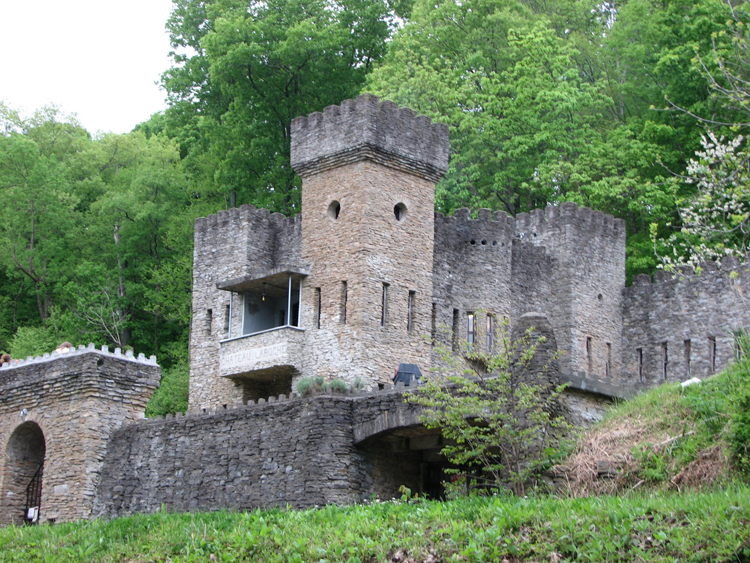
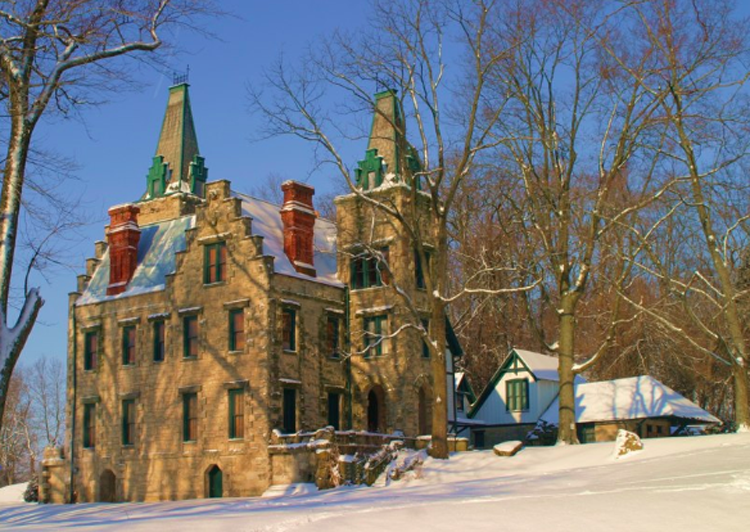
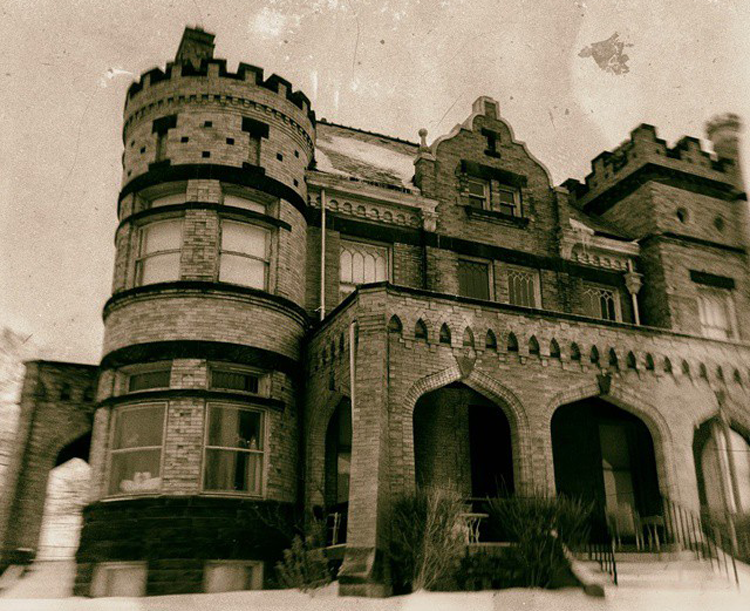
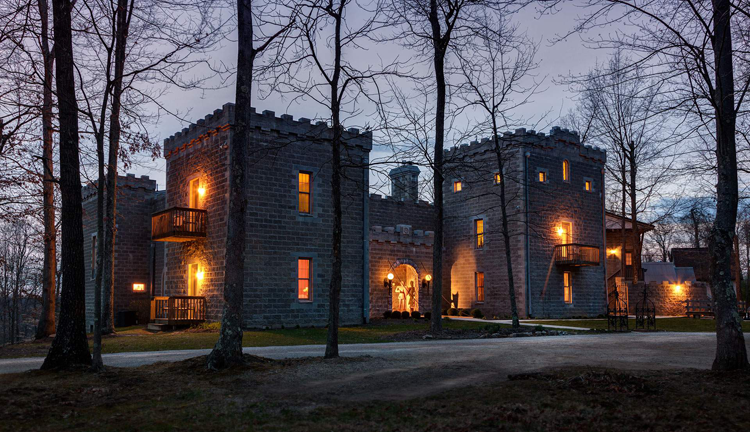
Loveland Castle
Photo courtesy of Loveland Castle
Chateau Laroche, more commonly known as Loveland Castle, was constructed by Harry Delos Andrews, a man whose history is almost as impressive as the castle itself. While serving as a medic in WWI, he contracted spinal meningitis and was declared dead. For some reason however, one of the attending physicians administered adrenaline, and his heart began to beat again. He wasn't declared "undead" until six months later, by which time his beloved had married another man. Instead of pursuing women, he directed his passions towards the castle. Inspired by the castles he saw while in Europe, Andrews built Loveland Castle over more than 50 years with cement, bricks and stones dragged from the Little Miami River. Though he had sworn off women, he actually received 50 different marriage proposals over his lifetime, presumably from women trying to live out their life-long dream of being queens. He declined them all, and when he passed in 1981, dedicated the castle to his Boy Scout troop known as the Knights of the Golden Trail. The boys continued to care for and renovate the castle, eventually opening it up to the public as a museum. Visitors are free to take a self-guided tour any day between 11 am and 5 pm.Piatt Castles
Photo courtesy of James A White the Piatt Castles
When Benjamin and Elizabeth Piatt moved their family from Cincinnati to Logan County in the 1820s, they had no idea how famous their name would become. Their sons, Abram Sanders and Don Piatt made permanent homes in the county, constructing massive, Gothic castles very close to one another. The castles, Mac-A-Cheek and Mac-O-Chee have no connection to cheesy pasta, but still stand as a testament to Ohio history nearly 200 years after their construction. The castles are still maintained and owned by later generations of the Piatt family, who opened the properties for tours in 1912. Visitors will find impressive, intricate towers, painted ceilings, fancy woodwork and multiple stories. While touring the castles is the most popular way to enjoy their splendor, the grand homes are also a favorite for weddings, concerts and historical reenactments.The Castle Inn
Photo courtesy of the Castle Inn Bed & Breakfast
Nestled in the heart of historic downtown Circleville lies the Castle Inn Bed & Breakfast, a romantic retreat with a story to tell. Built in 1895 by Samuel Ruggles, the castle is a mash-up of several European castles and boasts stained glass windows, stunning details and marble furnishings. While the inn hasn't lost any of its old-world charm, it is now complete with modern luxuries, and is a favorite for honeymooners. Couples can stay in the heart-shaped jacuzzi suites and enjoy massages and hot breakfasts included with the price of their stay — it doesn't get cuter than that!Ravenwood Castle
Photo courtesy of Jumping Rocks Media via the Ravenwood Castle
Ravenwood Castle is the newest castle in Ohio, and possibly the most luxurious. Construction on the castle began in September of 1994, and the main castle building was finished in 1995, but the grounds and cottages in the "medieval village" weren't completed until 1997. The building is modeled after the castles built to defend the border between England and Wales in the 12th and 13th centuries, and includes impressive turrets, fireplaces, a medieval-style great hall, a wine cellar and antique suits of armor and wall hangings. Each room is decorated in a unique, luxe and cozy fashion worthy of a romantic getaway, and the grounds are scenic and serene. In fact, over its 20 years, the castle has hosted many weddings and honeymooners on site! During your stay, don't miss out on the murder mystery events, during which you will hunt for clues, solve puzzles and avoid monsters while solving the latest mystery plaguing the castle.The Great Stone Castle
Each of the 17,000 square feet of the Great Stone Castle is magnificent. The gigantic mansion is housed by walls of Bedford Indiana Limestone (18 inches thick), and includes intricate stone columns, turrets and a wrap-around stone porch. The structure has been transformed into a Bed and Breakfast, with a spa on the first floor, elegant suites, fireplaces and Victorian-era furniture. If you'd like to explore the outdoors, the property includes 100 acres of wooded paradise and a peaceful lake. Honeymooners might enjoy reserving the private lodge and retreat for added seclusion.The Arts Castle
Photo courtesy of the Delaware County Cultural Arts Center
The history of the Arts Castle goes back to the mid 1800s, when William Little gifted the Arts Castle as a wedding present to his daughter, Elizabeth, and new son-in-law, George Campbell. Campbell was a renowned horticulturist known for collecting rare plants, and after a trip to China, returned with a gingko tree, which he planted in the front yard. After nearly 200 years, the tree still blooms there today. Following Campbell's death in 1898, the castle was donated to Ohio Wesleyan University, and it became home to the college's art department. The Arts Castle is now home to the Delaware County Cultural Arts Center, and offers a haven for creatives. Budding artists come to take classes in a range of topics, from painting and ceramics to ballet and theater. There couldn't be a better place to get those creative juices flowing — the spectacular architecture and storied history are enough to draw anyone in.The Cooke Castle
The Cooke Castle is actually a very elaborate vacation home from the mid 1800s. Jay Cooke was an experienced fisherman, and a wealthy benefactor from the war, who wanted a fishing haven where he could be surrounded by the waters of Lake Erie. He purchased the 6.5-acre Gibraltar Island, which sits in the bay very near South Bass island, and constructed a 15-room stone mansion, where he and his family enjoyed summering for the next six decades. While Cooke lived there, he entertained a number of prominent names, including President Rutherford B. Hayes, Salmon P. Chase and William Taft, all of whom enjoyed their fishing adventures. While extravagant, Cooke was not greedy, and sent all of the fish he could over to South Bass Island to feed the people who lived there. The famed home is now part of Ohio State University's Stone Lab extension campus, but is open to visitors who come to admire Cooke's handywork.Landoll's Mohican Castle
Photo courtesy of Landoll's Mohican Castle
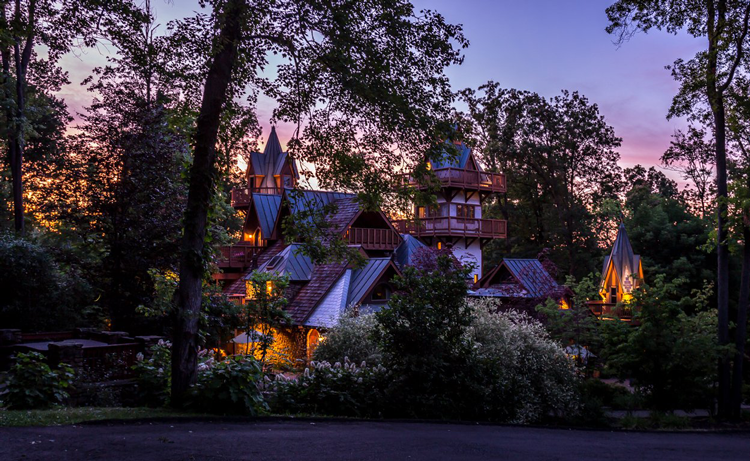
Landoll's Mohican Castle is luxurious from every angle. The tranquil property nestled deep in the heart of Mohican County will make you feel like you've just stepped into a fairy tale, offering uniquely designed suites, adorable cottages and beautiful grounds. The resort was actually constructed in 2002, inspired by old world castles from Europe. Though you'll find modern touches and comforts, the place exudes historical charm. Popular attractions here include carriage rides through the forest, ghost tours and murder mystery dinners.The Brumback Library
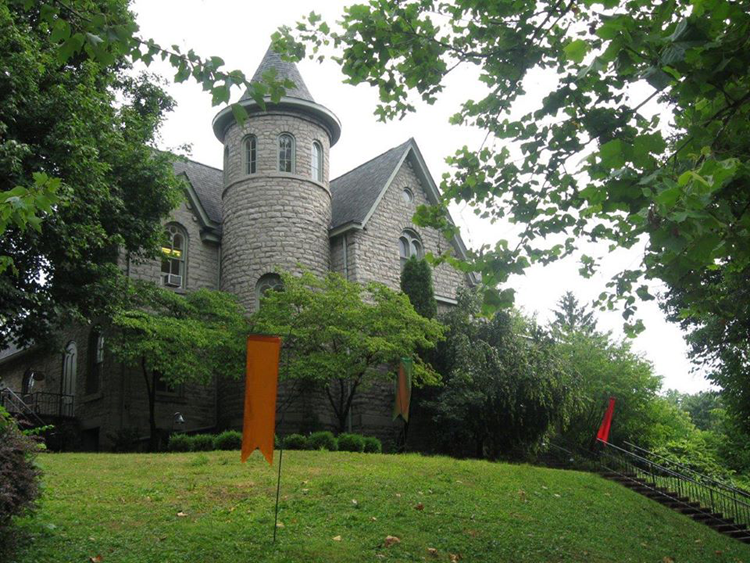
This ornate castle was the first, public county library to be constructed in the United States, and now stands as a testament to the growth of American culture and intelligence. John Sanford Brumback (the namesake of the library), came from humble beginnings and made a name for himself in the small Ohio town of Van Wert. In conjunction with the Van Wert Ladies Library Association (who dreamed of creating a library free to the public), he made plans for the construction of the ornate castle. Sadly, he died before it was completed, but the community rallied together to make his dreams come true. No expense was spared in the construction of the library, which was designed by Toledo's David L. Stine. The library finally opened in 1901 with 1,400 books. The Brumback family has continued to fund the library and its renovations and additions over the years.Stan Hywet Hall and Gardens
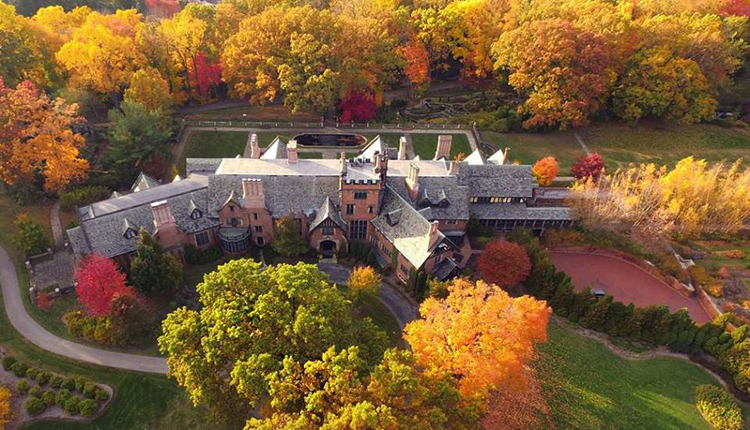
Photo courtesy of todd v. of Wasted Talent Media via the Stan Hywet Hall and Gardens
Stan Hywet Hall and Gardens is not technically a castle, but you could've fooled us — the estate is a shining example of 20th century architecture and a beloved Akron landmark. The property is a popular destination for visitors and tourists alike, boasting spectacular architecture and Victorian furniture, as well as some of the most gorgeous gardens in the state. The home was completed in 1915 as a home for Frank Seiberling, the founder of Goodyear Tire and Rubber Company. Over the years, he hosted a number of important business meetings in the manor, including a number of well-known or famous guests. After his death, the home was opened to the public — and since has received the title of the best historic home tour in America by the readers of USA today.Schwartz Castle
Schwartz Castle, located in the heart of Columbus's German Village, is an impressive structure and well-known landmark for the community. Though it now houses apartments and is not open to the public, we couldn't help but include it on the list, as its history is perhaps one of the most intriguing (read: creepy) of the bunch. Like all great stories, this one starts with love. Frederick William Schwartz, a successful German businessman, built the impressive home to surprise his fiancée, who was still in Germany. Before they were married, however, she called off the wedding, driving Schwartz into madness. He never fell in love again, and in fact, rarely left the house again. Rumor has it that he drank only rainwater for the rest of his life, stopped cutting his hair and sunbathed naked on the rooftop. He obsessed over the castle, eventually adding a series of secret passages and five stories of basement. Rumor has it, if you look closely and the lighting is right, you can still see him looking out the second story windows, or climbing the ladder to the roof. Spooky!Squire Castle
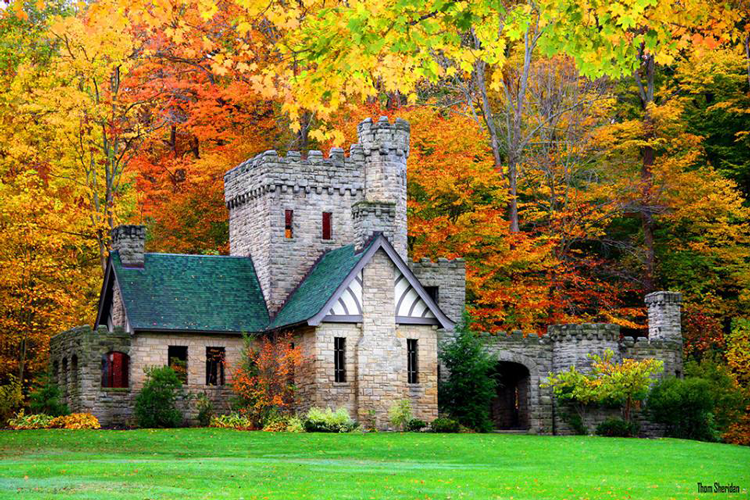
Photo courtesy of Thom Sheridan via the Cleveland Metroparks
Squire Castle is perhaps one of the most picturesque destinations in Cleveland. The ruins sit in Willoughby Hills in the North Chagrin Reservation, and visitors can stop by the marvel at the architecture and take photos after adventuring through the woodlands (or playing a round on the Manakiki Golf Course). Many of us would feel like royalty living in the castle, but it was actually constructed by Feargus B. Squire in the 1890s for the gatekeeper. He was planning on building a magnificent estate on the surrounding land, for him and his wife, but a tragic accident stopped him from achieving his dream. Squire's wife didn't visit the castle much out of hatred for the outdoors, and thus when she did come by to spend time with her husband, suffered from insomnia. The story goes that on these nights, she would wander through the house, carrying a red lantern for light. Late one evening, she ventured into the trophy room, filled with skulls from her husband's hunting adventures, and was frightened by something. Whether it was the trophies or something else, nobody knows, but upon fleeing, Mrs. Squire tripped and broke her neck. Squire blamed himself for his wife's death, and overcome with grief, halted construction on the project immediately. In 1922, he sold his 525 acres (and the castle) to Cleveland Metroparks. Some say the ghost of Mrs. Squire still wanders the property to this day, and at night, visitors look for the red light of her lantern. In fact, Squire's wife did not actually die on the property, but that's not a very fun story.Glamorgan Castle
William Henry Morgan, the son of a Welsh immigrant, began construction on Glamorgan Castle in 1904. He wanted only the best for his grand castle, and set his architect Willard Hirsh to Europe to study castles to ensure that his home would be equally as grand. He achieved his goal, as the castle (made solidly with Vermont marble) is still one of the most recognizable landmarks of Alliance, Ohio. The interior strays away from tradition and towards modern luxuries, boasting a billiard room, gigantic indoor swimming pool and bowling alley.Franklin Castle
Photo courtesy of Judge Raymond Pianka Cleveland Historical
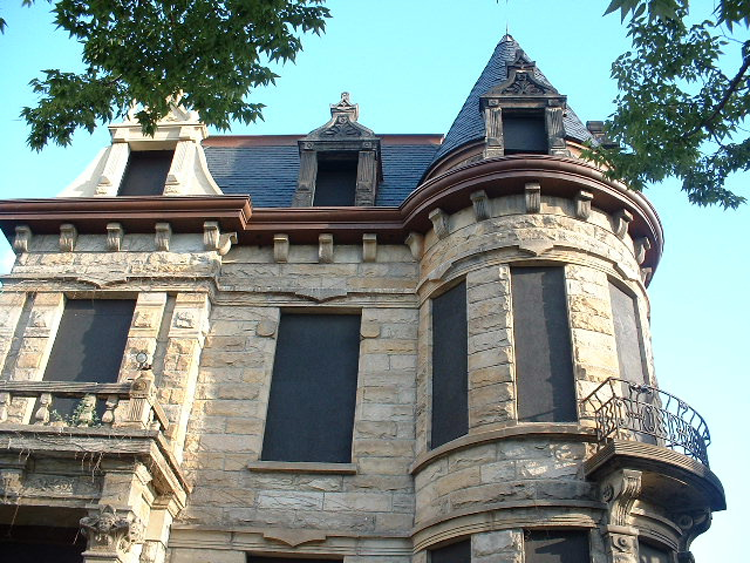
For a truly haunting experience, come visit Franklin Castle. The home was constructed in the mid 1800s by Hans Tiedemann, a wealthy German immigrant. The house has changed over the years, but the original construction included 21 rooms, a fourth floor ballroom, dumbwaiters, wine cellars, hidden passageways and marble fireplaces. That's plenty of room for ghosts, and this house has its full share. Reports of babies crying in the walls, but the most famous ghost here is Karen. Rumor has it she lost her life in a fight between her boyfriend and Tiedemann (her father), but was then hung to make it look self-inflicted. She can occasionally be seen through windows — a tall thin figure robed in black. Ghosts, while the main attraction of the castle, aren't its only claims to fame. The mansion has also been home to the German Singing Society, a doctor's office, a German Socialist organization, a grand party house, and apartments. None of the owners stay around long, presumably due to the hauntings.We Hope You Enjoyed Your Daily Dose of History!






The Cutler Real Estate® word mark is a registered trademark owned by Cutler and Associates, Inc.
Privacy Policy / DMCA Notice / ADA Accessibility


This site is hosted, designed and copyright
© 1994 - 2026 by
Delta Media Group, Inc. -- Patent Pending --